
Chase County Court Records After Arrest
After a Chase County arrest, the first written trail is usually the jail booking. That is a custody record, not the final court file. The Chase County Detention Center receives local arrestees and other prisoners under county jail authority, while the Chase County Attorney reviews law-enforcement reports and decides what charge to file. The local prosecutor listed in the research is Chase County Attorney Brian Henderson. Once a complaint, information, diversion matter, or other filing reaches district court, the case becomes a court record that can be checked through the court clerk, the Fifth Judicial District docket, or Kansas Case Search.
The custody side and the court side answer different questions. The Chase County jail inmate records page is the better route for current custody, booking status, and jail contact steps. Booking photos and photo requests belong with Chase County jail mugshots. Court records after a jail arrest focus on the filed charge, bond order, next hearing, warrant status, diversion, dismissal, plea, or conviction. A booking charge can be amended, reduced, dropped, or replaced after the county attorney reviews the case.
Find Chase County Court Records
The statewide starting point is Kansas District Court Case Search. The research found that the portal may be searched by case number, party name, business name, citation, or criteria available to the user's role. The official court records page also says public court records are available at each courthouse, with a public computer reserved for court case searches. For Chase County, the local court office is the Chase County District Court at the courthouse in Cottonwood Falls.
The Fifth Judicial District Chase County docket page is useful for upcoming hearings. It says dockets are updated daily, cover a one-month span, and are subject to change. That means the docket is not a substitute for confirming a hearing with the clerk. If a case does not appear online, the next step is the Chase County District Court clerk, who can route public terminal searches, file access, and records questions.
| Search Field | Where It Helps | Research Limit |
|---|---|---|
| Case number | Best when a citation, complaint, or clerk notice already gives the exact case. | Official snippet confirmed the field, but deeper portal fields were blocked during research. |
| Party name | Useful for finding a defendant after a Chase County jail arrest. | Name matches can vary by spelling, middle name, and alias use. |
| Business name | Used for court records involving entities, not most jail arrest cases. | Confirmed by official portal snippet. |
| Citation | Helpful when the arrest or charge began with a citation number. | Available search depth may depend on the user role. |
The Kansas Case Search portal screenshot in the project manifest is the relevant source image for statewide court lookup.
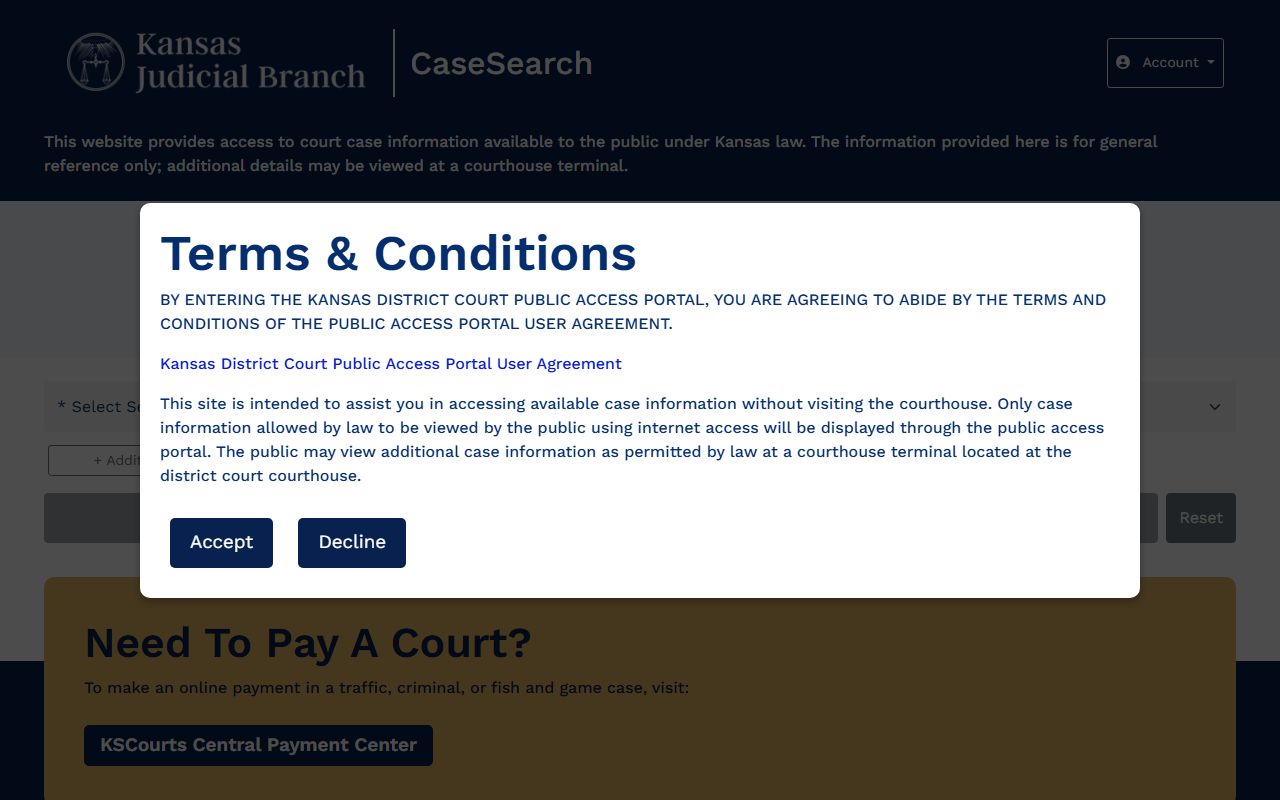
Use the portal for filed district court records, then confirm fast-changing hearing details through the local docket or clerk.
Chase County Arrest to Case
The local sequence is arrest, booking, prosecutor review, filing, and court events. A deputy or local officer may bring the person to the Chase County Detention Center. Jail intake creates the custody record. The county attorney then reviews reports and decides whether to file a charge, offer diversion where allowed, or take no court action. The filed document opens the court case. From that point, the court record is the best place to check charge status, bond orders, hearing dates, and final disposition.
- Confirm the booking with the detention center or the jail record channel if custody is the first question.
- Search Kansas Case Search by party name, case number, or citation once a filing may exist.
- Check the Fifth Judicial District docket for upcoming Chase County appearances.
- Call the district court clerk if the online portal does not show an older, sealed, or recently filed case.
- Use the Kansas.gov criminal-history search only when the need is statewide criminal history, not one court file.
Timing matters. A person can be booked before the formal court record is visible, especially when reports are still with the prosecutor. The docket can also change after it is posted. A no-result search should not be treated as proof that no case, warrant, or filing exists.
Chase County Charging Records
The charging document is the bridge between the jail arrest and the court record. Kansas research for Chase County identifies complaints, informations, and indictments as the charge labels readers may see or hear. A complaint often starts a criminal case. An information is a prosecutor-filed document commonly tied to felony practice. An indictment is a grand jury charge and is less routine than prosecutor filings. Diversion paperwork is handled through the county attorney's office, and the research notes that diversion paperwork may be emailed to the contact listed by that office.
| Document | Who Files It | What It Means After Arrest |
|---|---|---|
| Complaint | Prosecutor or officer through court process | Starts or supports the criminal case and states the alleged offense. |
| Information | Prosecutor | Formal charge document often used in felony court practice. |
| Indictment | Grand jury | Formal accusation returned by a grand jury in qualifying cases. |
The manifest includes the Chase County Attorney page, which identifies the local prosecutor and diversion contact.
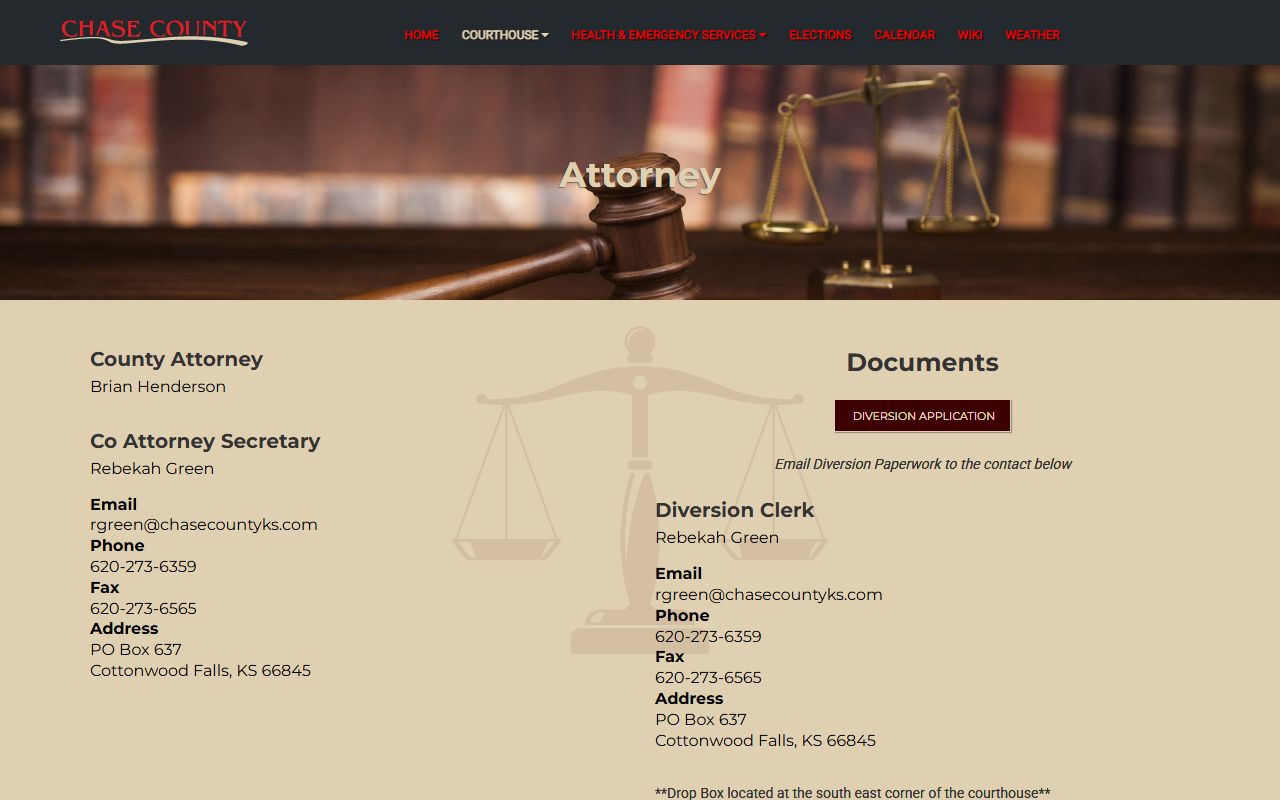
That office is the charging authority, but filed case records and hearing schedules are handled through district court.
Chase County Charge Status
Charge status shows where the court record stands. Pending means the charge has been filed but not resolved. Amended means the prosecutor changed the charge wording, level, or count. Dismissed means that count ended without a conviction. Diversion means prosecution is deferred under an agreement. Disposition means the final result of the case or count. These terms are important because jail records can show allegations before guilt has been found or admitted.
| Status | Plain Meaning | Why It Matters |
|---|---|---|
| Pending | The filed charge has not reached a final result. | Hearing dates, bond terms, and court orders may still change. |
| Amended | The charge was changed after filing. | The court record may no longer match the original booking label. |
| Dismissed | The charge ended without conviction. | Other counts or cases may still remain active. |
| Diversion | Prosecution is deferred under an agreement. | Compliance can affect whether the case later proceeds. |
| Conviction | A guilty plea or finding has been entered. | Sentencing, custody, probation, or KDOC transfer may follow. |
Note: Chase County docket entries should be confirmed with district court because the Fifth Judicial District says posted dockets can change.
Bond After Chase County Arrest
Bond is part of the court path after booking. The research did not locate a Chase County online bond-payment page, so payment location and method should be confirmed before anyone tries to pay. The practical route is to confirm custody with the detention center or sheriff, ask whether bond has been set, ask which court set it, and ask whether another hold blocks release. A local bond may not release a person held for ICE, DOC, an out-of-county warrant, a federal matter, or a judge-ordered no-bond condition.
| Bond Type | How It Works |
|---|---|
| Cash bond | The full amount is paid as security for appearance, subject to court rules and later orders. |
| Surety bond | A licensed bondsperson guarantees appearance when the court permits surety. |
| Own recognizance | The person is released on a promise to appear and comply with conditions. |
| No-bond hold | No release occurs until a court or holding agency takes further action. |
For court-filed cases, bond status can be checked with Chase County District Court. For ICE detainees, a county criminal bond may not resolve immigration custody, so the ICE facility phone or ICE ODLS is the correct federal channel.
Chase County Warrant Records
No official Chase County online active-warrant search was located in the research. The sheriff page did not publish a public warrant list in accessible text. Court records after an arrest may still show bench-warrant activity, failure-to-appear events, or warrant-related counts once a case is filed. For a warrant question, use the Chase County Sheriff's Office, Chase County District Court, Kansas Case Search, and Kansas VINE for custody notice after a person is booked.
- Arrest warrant
- A judge authorizes arrest based on probable cause or a complaint.
- Bench warrant
- A judge orders arrest for failure to appear or noncompliance.
- Search warrant
- A warrant to search a place or item. It is not an inmate record.
- Detainer
- Another agency asks the jail to hold the person for that agency.
Charge Versus Conviction
A Chase County arrest can produce a charge record without producing a conviction. A charge is an accusation. A conviction is a guilty plea, guilty finding, or other judgment that results in guilt. This distinction is critical for court records after a jail arrest because a roster, docket, or complaint can show an allegation long before the court decides the case.
| Point | Charge | Conviction |
|---|---|---|
| Stage | Filed accusation after arrest or citation. | Final guilt result by plea or finding. |
| Proof | Based on filing standards and probable cause. | Requires plea or proof beyond a reasonable doubt. |
| Record meaning | May be pending, amended, or dismissed. | Can affect sentence, custody, supervision, and expungement timing. |
Sealed and Expunged Records
Kansas public access begins with the rule that public records are open unless another law limits access. K.S.A. 45-216 states that policy. K.S.A. 45-218 covers inspection and agency action on requests, while K.S.A. 45-221 lists records that agencies need not disclose, including categories tied to criminal investigations and privacy. Court records can also be sealed or expunged through court process when the law allows.
| Record Limit | What It Does | Kansas Route |
|---|---|---|
| Sealed | Limits public view of a court record while allowing access in narrower circumstances. | Depends on the case type and court order. |
| Expunged arrest | Limits public access to eligible arrest records after petition and court action. | K.S.A. 22-2410. |
| Expunged conviction or diversion | Limits access to eligible convictions, related arrests, and diversions. | K.S.A. 21-6614. |
The manifest image for K.S.A. 45-218 is relevant to record inspection and request timing.
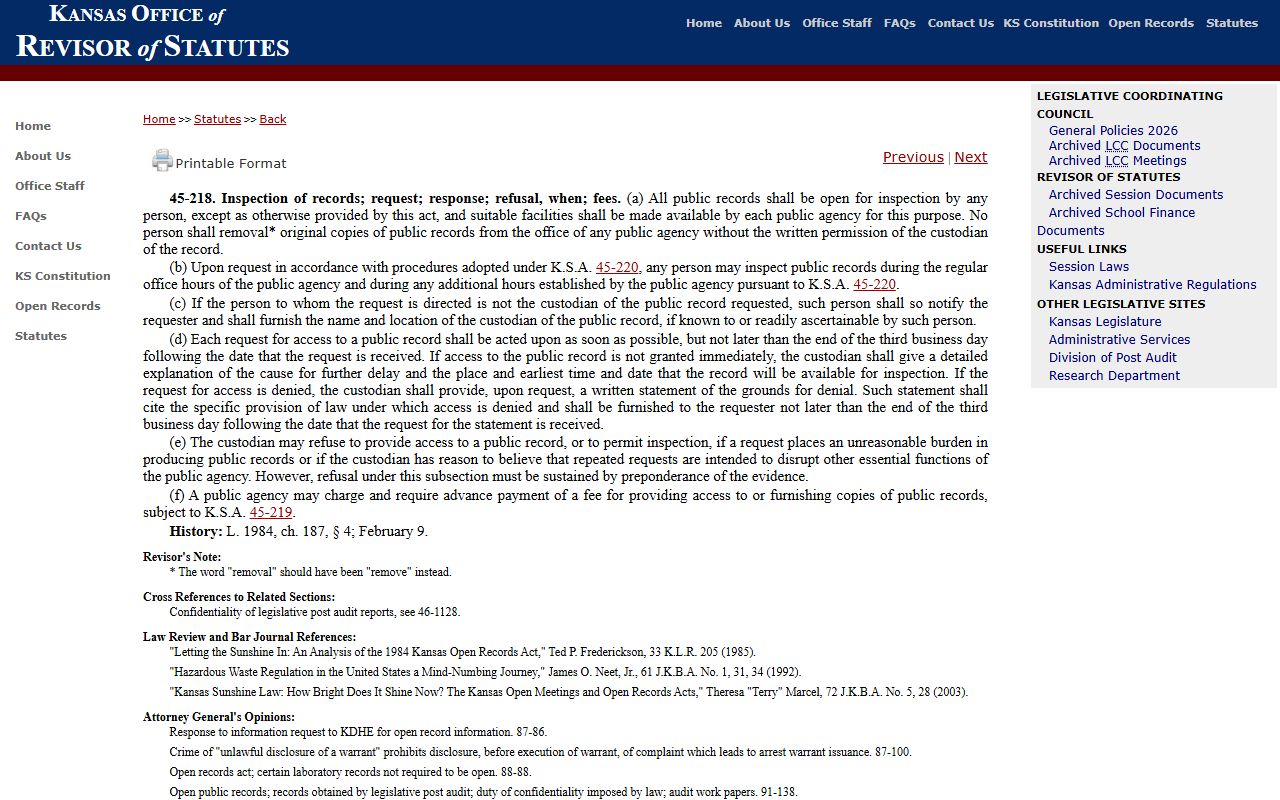
Use KORA for records requests, but use the district court for court-file access, sealing questions, and expungement petitions.
Background Search Limits
A court case lookup is not the same as a statewide criminal-history search. The research identifies Kansas.gov criminal-history records through KBI as the statewide fallback when the need is broader than one Chase County court case. KASPER also warns that it is not a complete criminal history. It covers persons and cases associated with KDOC-funded or KDOC-operated programs and has its own update limits.
Important: Do not use informal court, jail, or custody lookups for credit, employment, housing, insurance, or other FCRA-covered screening.